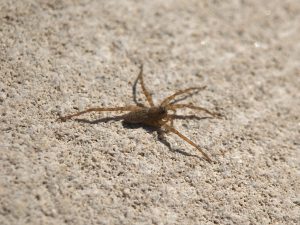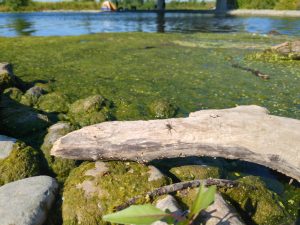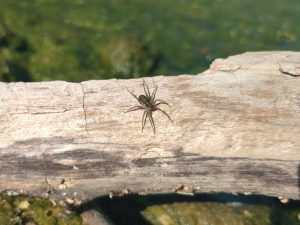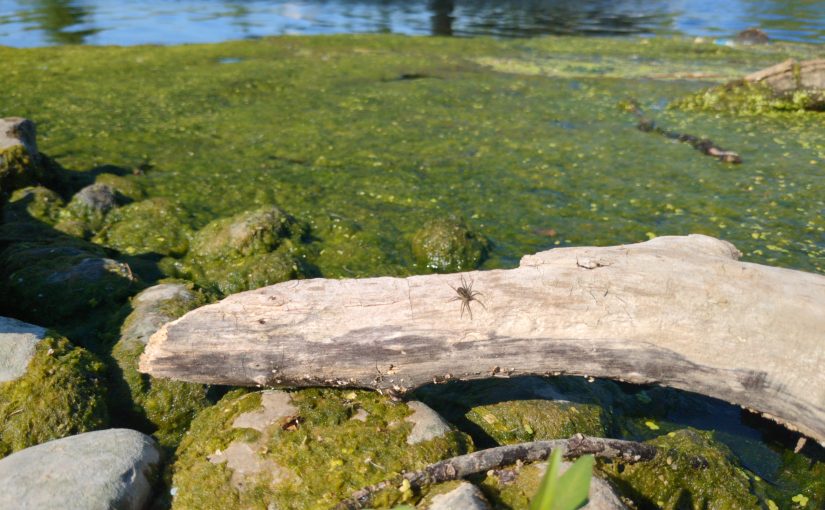
A small thin-legged wolf spider rests on a driftwood log near the rocky, algae-covered shore of the new Don River mouth.

Arachnids of Biidaasige Park

Toronto’s newest park (🎁), it is widely agreed, is a jewel on the waterfront and a rare example of the city doing something ambitious. The area, once a flood-prone industrial wasteland, has been turned into a lush wetland the Don River meanders through on its way to the lake. There are plenty of attractions and amenities for humans too: self-cleaning washrooms, a zipline, giant animal-shaped climbing structures, and a hilly Cheltenham Badlands-inspired playground with an intriguing variety of water pumps and locks. “A triumph,” says Designlines Magazine. “My six year old cried when we had to leave,” commented some random Redditor.

Since the rehabilitation began, wildlife has eagerly returned to the park, flourishing amid native plants, big old dead trees, and rocky beaches. Like, unironically, nature is healing (🎁). There are plenty of photos and sightings of wildflowers, birds, fish, mink and beavers, etc. But I know you all are wondering: what about spiders? I had not spent much time in the park, but in mid-August, after seeing the swathes of prime Pardosa lapidicina habitat while cycling through on the way to Tommy Thompson Park, I had to check it out.

Just a sampling of arachnids:
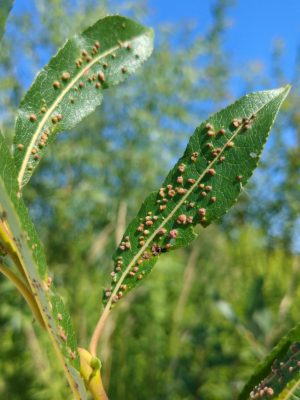
A narrow, shiny willow leaf covered with lots of little bumps.
Likely the willow bead gall mite (Aculops tetanothrix).
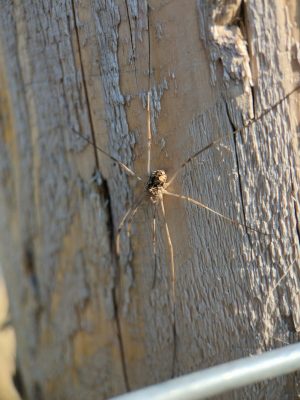
An opilionid, an arachnid with very long thin legs, two little eyes on a tubercle, and a blob-like body, is splayed out on a fence post.
An opilionid that seems to have lost a few legs (don’t worry, they can spare a few).

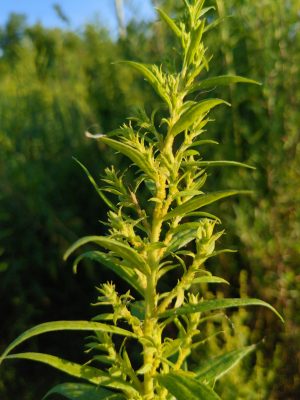
At golden hour, the top of an aphid-covered goldenrod plant. There is a spider somewhere in the picture.
There’s a long-jawed orbweaver (Tetragnatha) somewhere on this aphid-infested goldenrod.
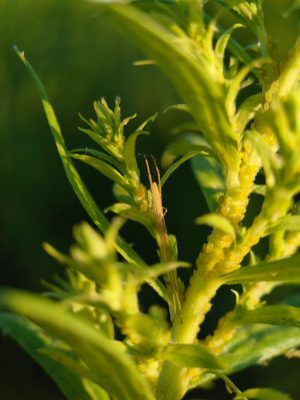
Close-up of very long thin spider on aphid-infested goldenrod.
There it is!

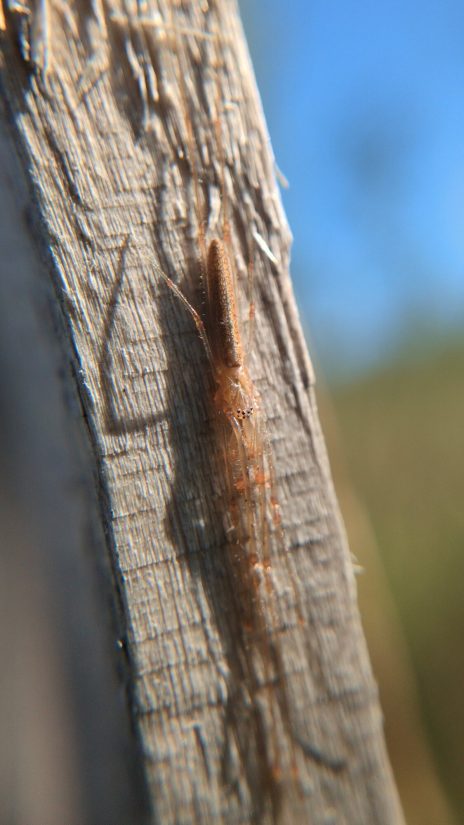
A long thin spider, a long-jawed orbweaver, flattened against a wooden picket in a fence.
A less camouflaged (but still hard to spot if you’re not looking for it) Tetragnatha.

In low plants by the side of a path, a small glossy dark spider hangs in its sheet-like web (which is only visible because of little plant bits in it).
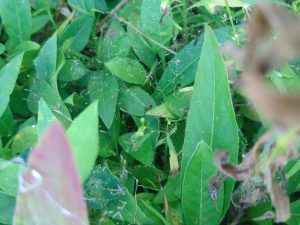
In the low vegetation by the walking paths, there were many sheet-web weavers (family Linyphiidae).
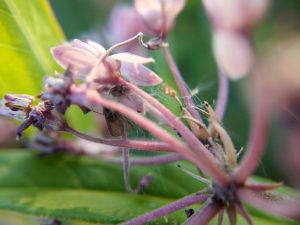
Light pink milkweed flowers are covered in a tangle of silk. A small mesh-web weaver hides inside.
Small mesh-web weavers (family Dictynidae) covered flowers with their irregular webs of fuzzy silk.

But let’s get to what I came for: Pardosa!
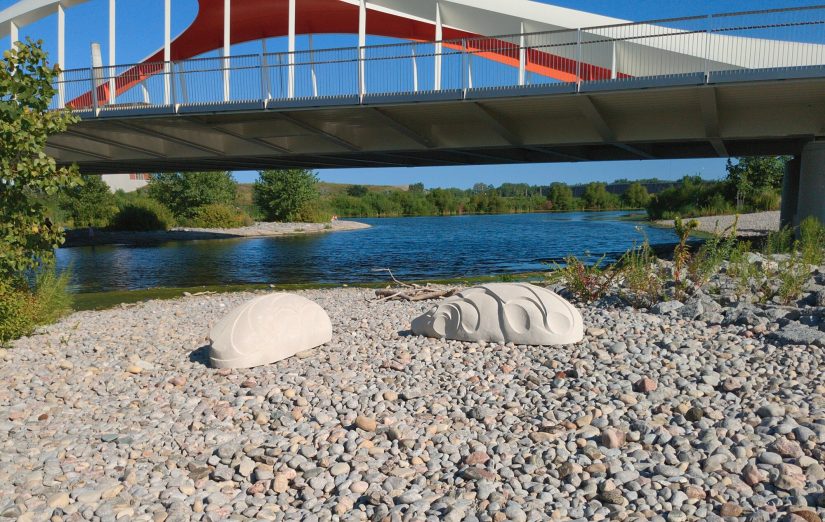
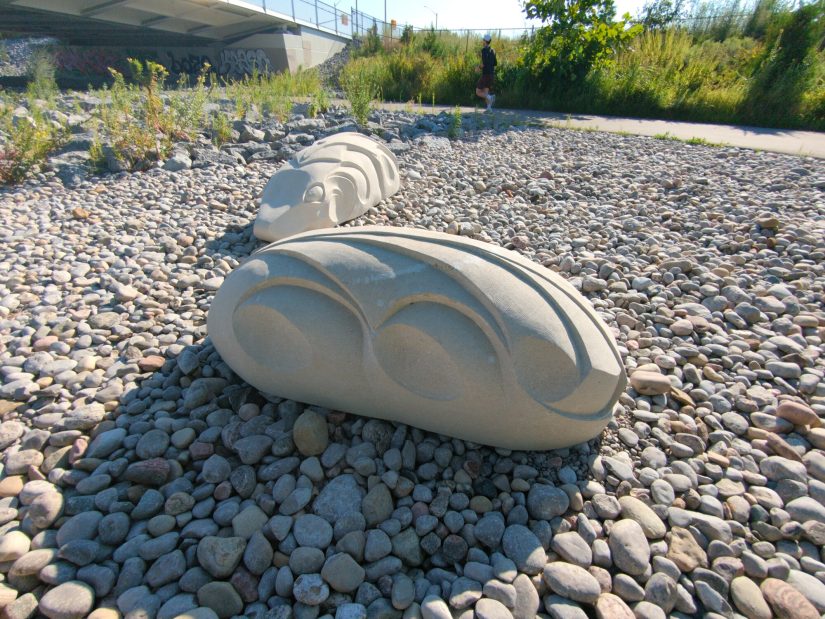
A swooping white and red bridge crosses the Don, with a beach of round fist-sized rocks and two pale sculptures (frogs?) in the foreground.
This cobble beach by the Don is perfect thin-legged wolf spider (Pardosa) habitat.

Two stone sculptures on a cobble beach; they seem like frogs?
Pardosa love sunning themselves and these sculptures (frogs?) were great territory.

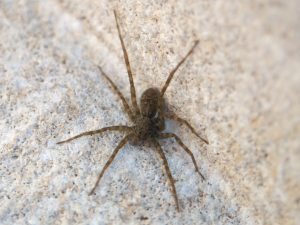
A grey-brown wolf spider with spiky legs on sculpted white stone.
One Pardosa I managed to briefly corner on the sculpture.
A small wolf spider missing several legs basking in the sun on a stone sculpture.
This one was down a few legs but still enjoying the golden-hour sun.

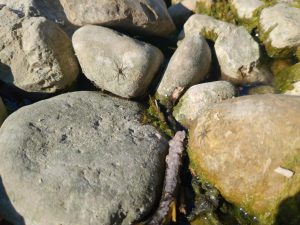
Algae-covered rocks by the water's edge, with a couple small wolf spiders basking on them.
Down by the edge of the water, Pardosa sunned themselves on rocks…
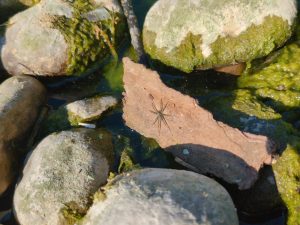
A small light grey-brown thin-legged wolf spider on a small piece of bark or driftwood.
…and driftwood.

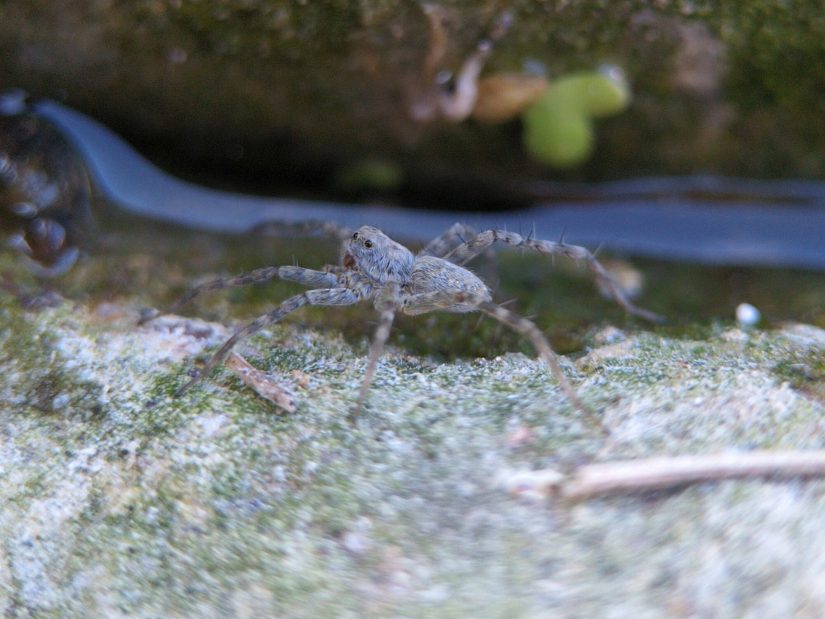
A small sprightly light-grey thin-legged wolf spider on the side of a rock, right next to the water.
Light enough to run over water, they have no qualms about being right next to the river.

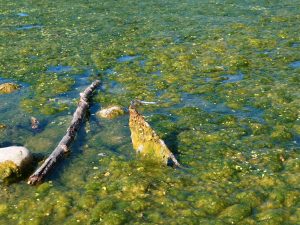
A small thin-legged wolf spider rests on a driftwood log near the rocky, algae-covered shore of the new Don River mouth.
This larger Pardosa had a great view of the Don on this washed-up log.
Close-up of the wolf spider on driftwood.
Not very good close-up (I didn’t want to risk scaring her off.)

Of the insects I saw, dragonflies and damselflies were especially abundant. I couldn’t get photos of them in flight, but here are just a few resting ones I got pictures of.
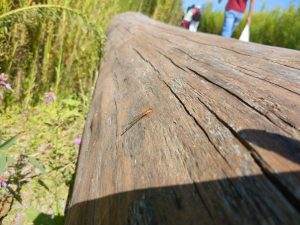
A pretty orange damselfly suns itself on a large log bench as parkgoers pass by.
This orange damselfly went unnoticed by other parkgoers.
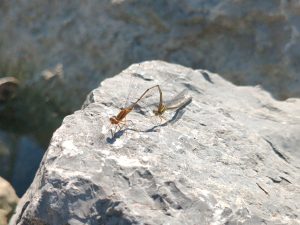
A pair of damselflies, one with the end of its body connected to just behind the other's head, perch on a rock.
Many damselflies were mating.
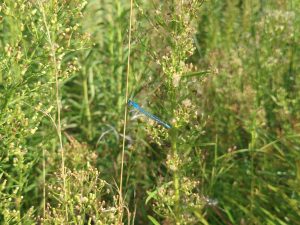
A slender vivid blue damselfly perched amid dense greenery.
This damselfly was a gorgeous shade of blue.
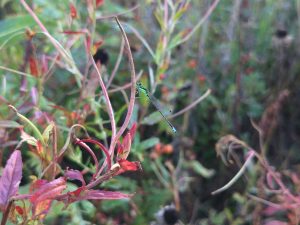
A neon green and black damselfly perches on pink-tinged plants on the edge of a meadow.
This one was really striking!
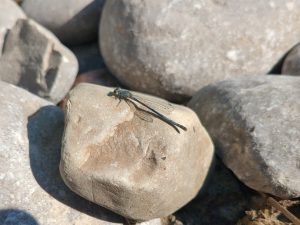
A light blue damselfly with green eyes rests on a small rock.
Managed to get quite close to this one.
A very large light blue dragonfly perches on an algae-covered rock in the Don.
It’s hard to see, but there is a very large blue dragonfly sitting on top of the rock.

The flowers attracted a huge range of insects.
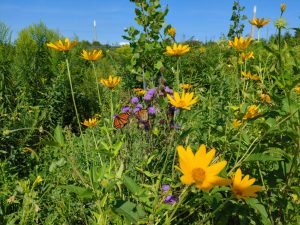
Orange-and-black monarch butterflies feed on purple flowers amid a meadow of tall plants and wildflowers.
Monarch butterflies were everywhere, feeding on flowers.
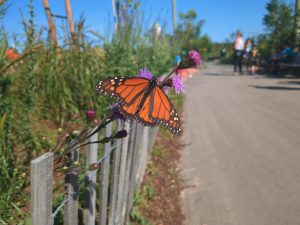
An orange-and-black butterfly perches on purple flowers overhanging a small low wooden fence next to a pathway.
A close-up.
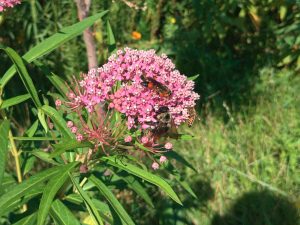
A large wasp, a bumblebee, and a honeybee all feeding on pink milkweed flowers.
This pink milkweed attracted a large wasp (Sphex?), a bumblebee(?), and a honeybee.
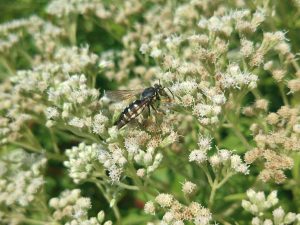
A light yellow and black wasp feeding on small white flowers that may be boneset or Joe-Pye weed.
I think this is a Bembix sand wasp, and I know the filename says “boneset” but now I think it’s Joe-Pye weed or similar.

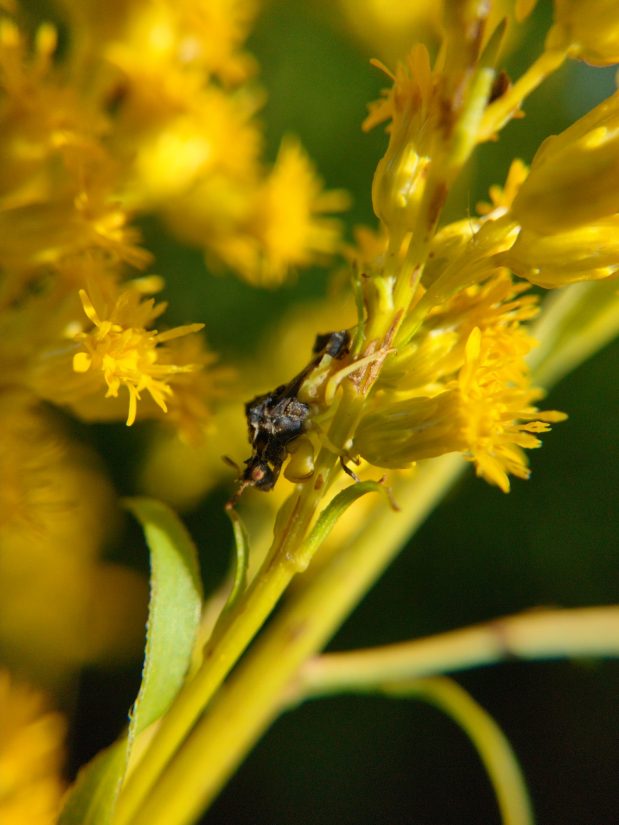
A black and yellow jagged ambush bug (Phymata) on flowering goldenrod.
One of my favourite finds was this well-camouflaged jagged ambush bug (Phymata).

I like this view because it seems to encapsulate Toronto’s past (the elevated Gardiner Expressway, relic of a time when the car was king); its present (skyscrapers and condos), and perhaps its future (the lazy green river with a duck paddling in it).
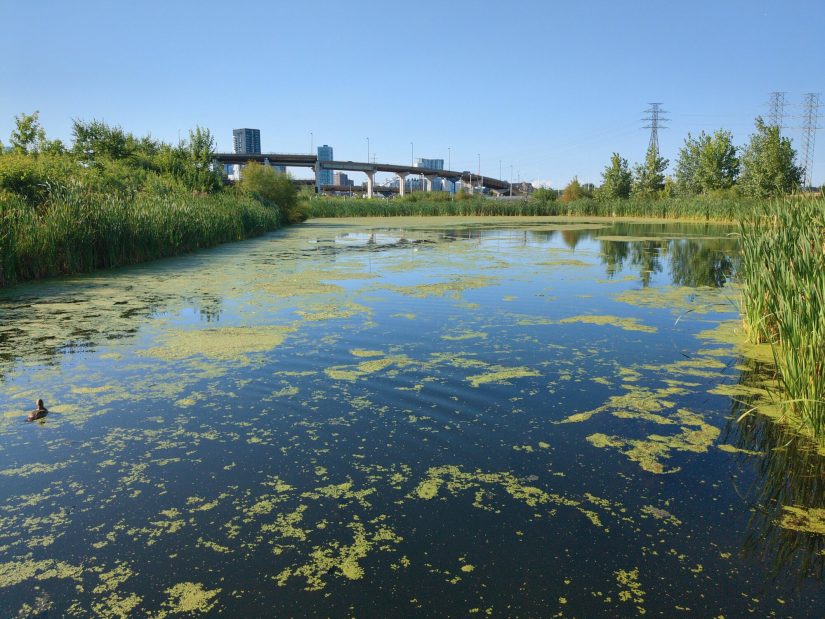
By the Don, looking north to the Gardiner Expressway and the city beyond.
Where the Don enters the park, looking northward.

I also checked out the more manicured western part of Biidaasige that had just opened, and took a jaunt to the “Don Greenway Trail Loop” in the southwestern corner of the park. By then the sun was setting and I was very tired, so I headed home.
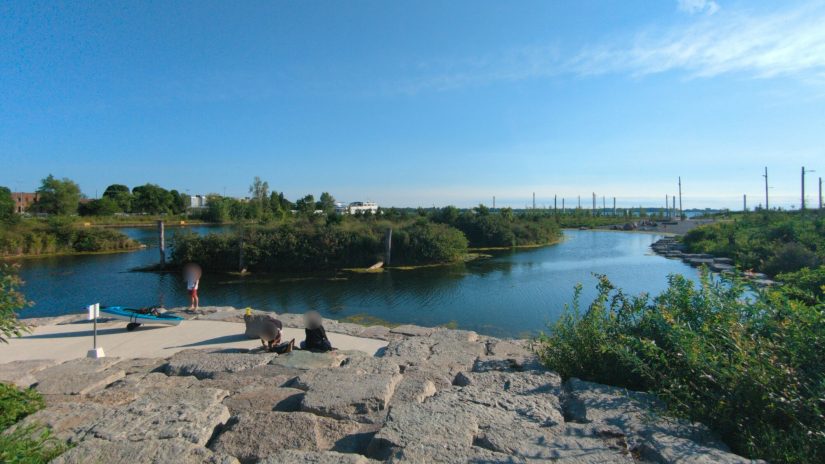
A few parkgoers look out over the then-newly opened western part of Biidaasige Park.
Looking out from the then-just-opened western bit of the park. Notice the little islands offshore.

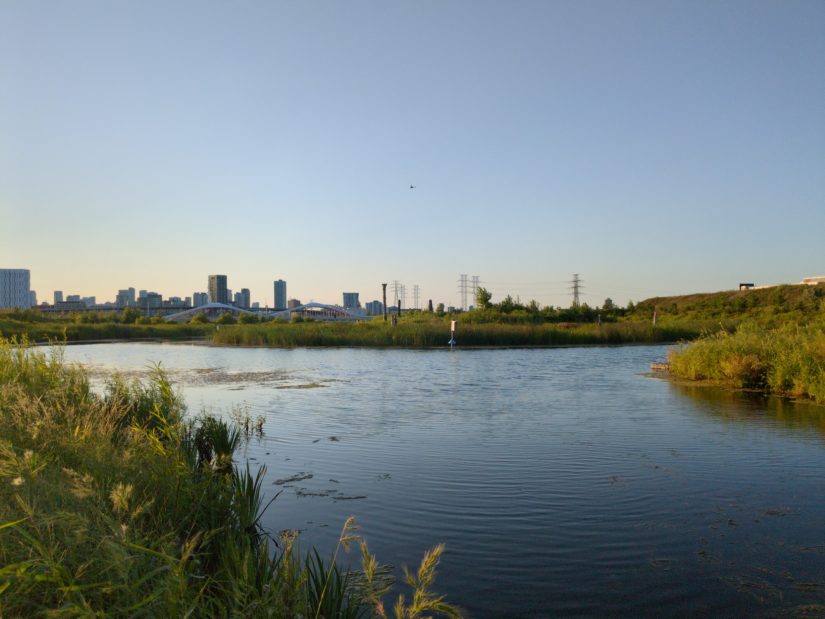
The furthest southeast corner of Biidaasige Park, showing a low vegetated island surrounded by water and wetlands.
An island formed out of a little pond connected to the Ship Channel, at the southwestern corner of the park. There are bird habitats on poles.

And just think, this all could have been a casino/ferris wheel/monorail/.

Leave a Reply

Your email address will not be published. Required fields are marked *

This site uses Akismet to reduce spam. Learn how your comment data is processed.